
The Art of Audio Mastering: Why It Matters More Than You Think


Understanding Audio Mastering
Audio mastering is a crucial step in music production that often flies under the radar. While recording and mixing are widely recognized stages, mastering is the final polish that transforms a track from good to great. This process ensures that sound quality is consistent across all playback devices, giving listeners the best possible experience.
Mastering involves fine-tuning the sonic elements of a track, such as adjusting the balance between frequencies, enhancing stereo width, and optimizing volume levels. It's the last opportunity to make crucial adjustments before the music is released to the public.
Why Mastering Matters
Many might wonder why mastering is necessary if a track already sounds good after mixing. The answer lies in its transformative power. Mastering brings cohesion to an album, ensuring all tracks contribute to a unified sound. This is achieved by applying consistent audio processing to each track, which can be particularly important in albums with diverse musical styles.
Moreover, mastering enhances the dynamic range, ensuring that the music maintains its impact whether played on high-end systems or basic earbuds. This adaptability is crucial in today's diverse listening environments.
The Mastering Process
The mastering process involves a series of steps that require both technical skill and artistic sensibility. Here's a glimpse into what happens during mastering:
- Equalization (EQ): Adjusts the balance of frequencies to ensure clarity and presence.
- Compression: Controls the dynamic range to maintain consistency across different playback systems.
- Limiting: Boosts the overall volume to competitive levels without distorting the sound.

Tools of the Trade
Audio mastering relies heavily on specialized tools and software. Engineers use a combination of hardware and digital plugins to achieve the desired sound. Popular tools include EQs, compressors, limiters, and saturators, each playing a unique role in shaping the final sound.
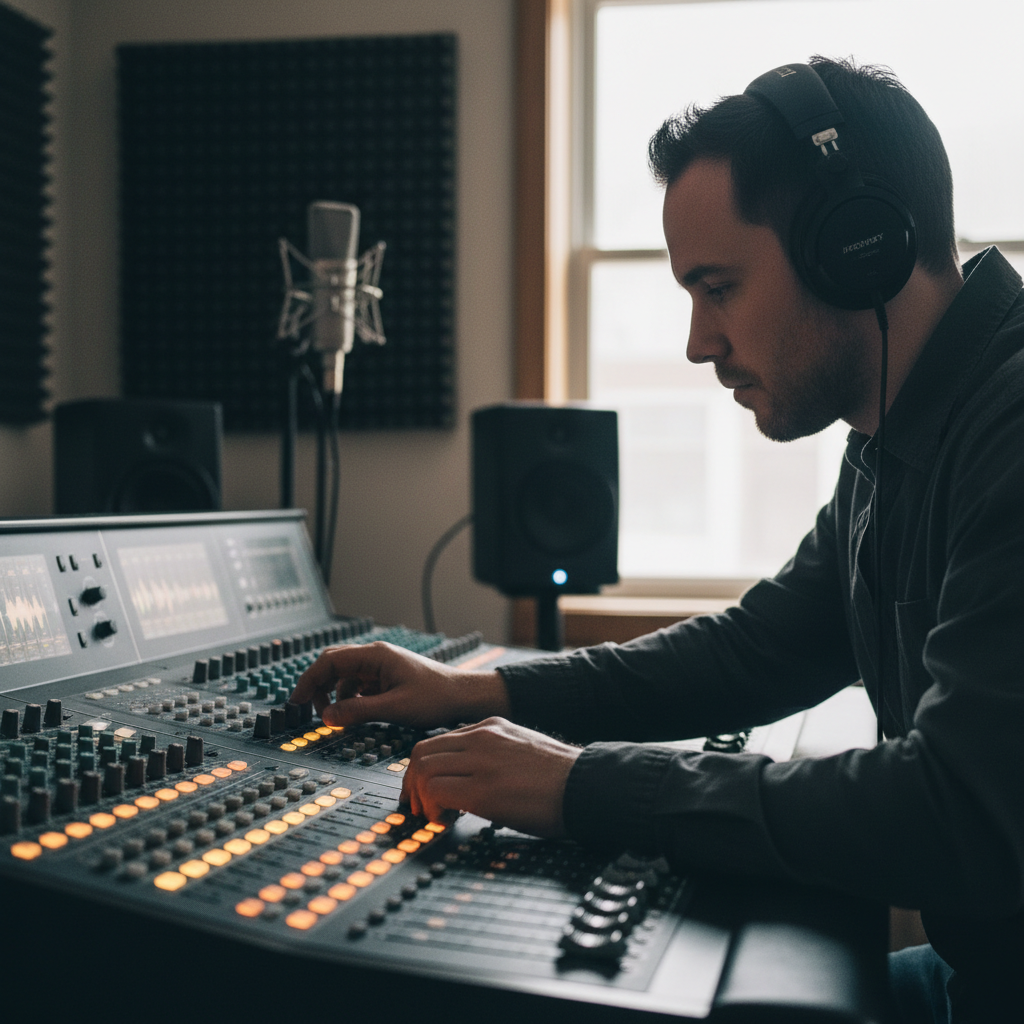
Mastering engineers often have access to acoustically treated studios, allowing them to hear precise details in the music. This environment is essential for making informed decisions during the mastering process.
The Role of a Mastering Engineer
A professional mastering engineer brings a fresh perspective to a project. Their expertise allows them to identify areas of improvement that might be overlooked by those too close to the project. They ensure that the artistic vision is preserved while enhancing the overall sound quality.
Collaborating with a mastering engineer can elevate a project, providing insights that go beyond technical adjustments. Their experience across various genres and styles is invaluable in achieving the desired result.
Conclusion
Audio mastering is an essential, yet often underestimated, part of music production. It ensures that a track not only sounds good on its own but also holds its own in the competitive music landscape. By understanding its significance, musicians and producers can make informed decisions that enhance the quality of their work.
In the end, mastering is the art of bringing a musical vision to life, ensuring it resonates with listeners in the way it was intended. Whether you are an artist, producer, or music enthusiast, appreciating the value of mastering can deepen your understanding and enjoyment of music.